How to Build a Finance Department Subledger-to-General-Ledger Reconciliation Process That Catches Discrepancies Before They Compound
A structured subledger-to-GL reconciliation process helps finance teams detect and resolve posting gaps across accounts receivable, accounts payable, and fixed assets before close.
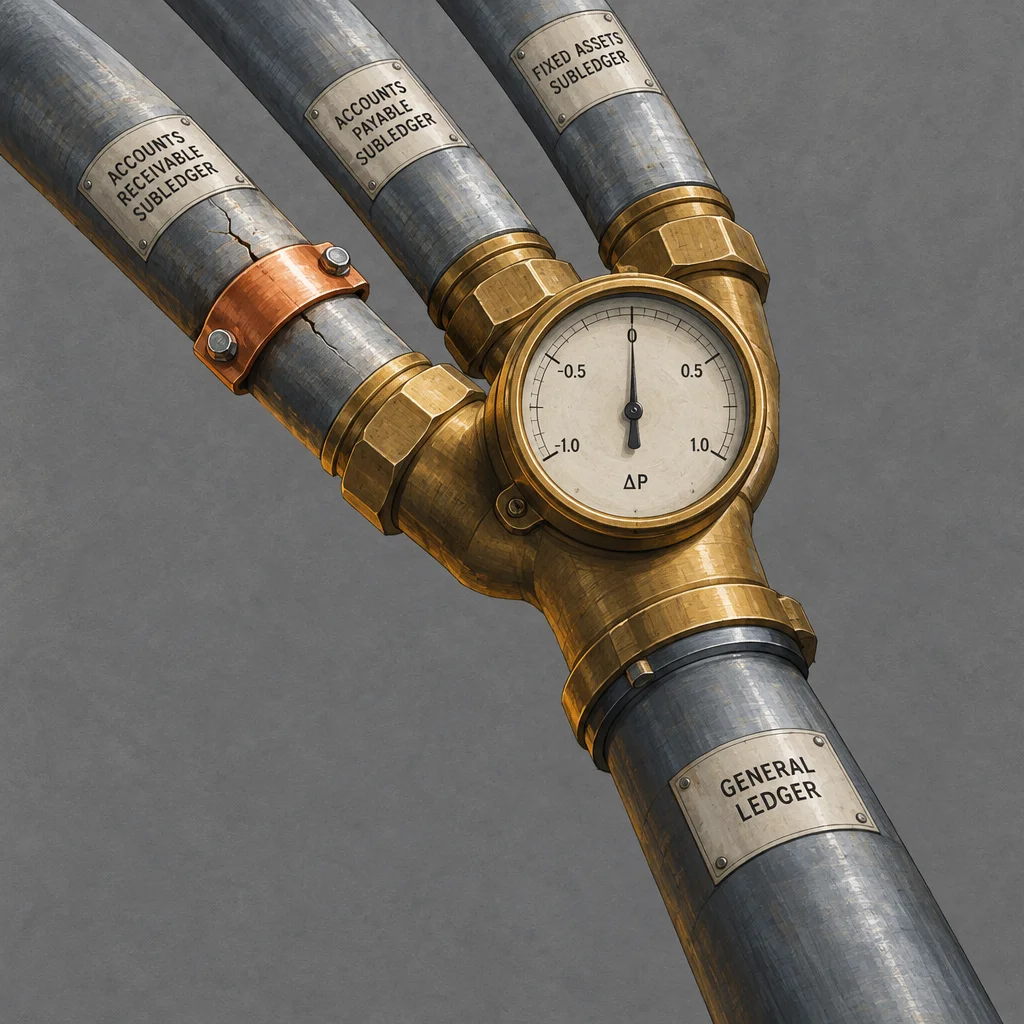
Why the Subledger Gap Is a Persistent Close Risk
Every finance team knows that the general ledger is the system of record, but the detail behind most significant balances lives somewhere else. Accounts receivable totals roll up from a billing subledger. Accounts payable balances come from a payables module. Fixed asset net book values originate in an asset register. When those source systems and the GL fall out of agreement, even briefly, the downstream effects can include misstated financial statements, audit findings, and reconciliation work that compounds each period until someone traces the discrepancy back to its origin.
Building a deliberate subledger-to-GL reconciliation process is one of the highest-return investments a finance team can make in close quality. The process does not require expensive software. It requires clear ownership, a consistent cadence, and a structured way to document and resolve what it finds.
Identify Every Subledger That Feeds the General Ledger
The first step is a complete inventory. Many finance teams reconcile accounts receivable and accounts payable by habit but overlook subledgers that have grown up around specific business needs, such as a loan origination module, a lease accounting tool, a subscription billing system, or a warranty liability tracker. Each of these produces journal entries or batch postings that are supposed to match a corresponding GL account or group of accounts.
For each subledger in scope, document the following: which GL accounts it feeds, the frequency and method of posting (automated batch, manual journal, or API feed), who owns the subledger on the operational side, and who owns the corresponding GL accounts on the finance side. This mapping becomes the foundation of your reconciliation schedule.
Set a Reconciliation Frequency That Matches Posting Risk
Not every subledger carries the same risk of divergence. A fixed asset subledger that receives entries only when assets are acquired, transferred, or retired may be safely reconciled monthly. A high-volume accounts receivable subledger that processes hundreds of cash applications daily deserves daily or weekly reconciliation, not just a monthly review.
As a practical suggestion, classify each subledger by transaction volume and materiality, then assign a minimum reconciliation frequency accordingly. High-volume, high-dollar subledgers warrant weekly reconciliation. Lower-activity subledgers can be monthly. All should be fully reconciled before each period-end close is certified.
Define the Reconciliation Method for Each Subledger
A subledger-to-GL reconciliation is not simply comparing two totals and confirming they match. A complete reconciliation method includes three elements.
Balance comparison. Pull the subledger aging or summary total as of the reconciliation date and compare it to the GL control account balance as of the same date. The two should agree to the penny after accounting for any known timing differences.
Timing difference documentation. Some differences are legitimate and expected. A batch that posts in the subledger on the last business day of the month may not hit the GL until the following morning. Document these expected timing gaps in your reconciliation template so reviewers understand what is normal versus what requires investigation.
Open item identification. Any difference that is not explained by a documented timing item should be logged as an open reconciling item. Each open item should include the dollar amount, the transaction or batch reference, the date it was first identified, the assigned owner, and an expected resolution date.
Build a Standard Reconciliation Template
Consistency across reconciliations matters as much as the reconciliations themselves. When each person on the team formats their work differently, the review process slows and discrepancies are easier to hide in presentation variability.
A standard template for each subledger reconciliation might include: the subledger name and GL account number, the as-of date, the subledger balance, the GL control account balance, a section for documented timing items with net adjustment, the resulting reconciled difference, a section for open items, and sign-off lines for the preparer and reviewer.
Templates can live in a shared drive, a close management tool, or a spreadsheet workbook. The format matters less than the discipline of using it every period without exception.
Assign Clear Ownership at Both the Subledger and GL Level
A common breakdown occurs when subledger owners assume finance is watching the GL and GL owners assume the subledger team is flagging discrepancies. Neither assumption is reliable.
For each subledger in your inventory, name a single reconciliation owner who is responsible for preparing the reconciliation on schedule, identifying open items, and escalating anything that cannot be resolved before close. Name a reviewer who is separate from the preparer, ideally a senior accountant or controller, who signs off that the reconciliation is complete and any open items are either resolved or appropriately disclosed.
This two-person structure is not bureaucracy. It is the minimum control that keeps reconciliations honest and ensures that a posting error does not go undetected because the person who made it is also the person reviewing the match.
Create a Process for Resolving and Escalating Discrepancies
Finding a discrepancy is only half the work. The process needs to define what happens next. A practical resolution workflow might look like this.
When an open reconciling item is identified, the reconciliation owner has a defined window (for example, two business days) to trace the source and propose a resolution. If the item is caused by a posting error in the GL, it goes through your standard journal entry approval process. If it originates in the subledger, the owner coordinates with the operational system owner to correct the source data or post an adjustment.
Any item that cannot be resolved before the close certification deadline should be escalated to the controller or CFO with a clear description of the dollar amount, the likely cause, and the proposed resolution timeline. Unresolved items should never simply disappear from one period's reconciliation to the next without documentation.
Review the Process Periodically and Update the Subledger Inventory
Businesses add systems and subledgers faster than finance processes are updated to reflect them. A new revenue recognition tool, a treasury management system, or an acquisition that brings a legacy billing platform into scope can each create a new reconciliation gap if no one adds it to the subledger inventory.
A practical suggestion is to review the subledger inventory at least once per fiscal year, or whenever a significant system change occurs. Ask the IT and operations teams whether any new systems are posting to the GL. Compare the list against your current reconciliation schedule and add any gaps.
The Payoff Is a Cleaner Close and a More Defensible Balance Sheet
Teams that run a consistent subledger-to-GL reconciliation process find that period-end close becomes more predictable. Auditors spend less time tracing balances because supporting detail is already organized and reconciled. Discrepancies that used to surface during fieldwork are caught internally weeks earlier, when they are still straightforward to correct.
The process does not need to be complex to be effective. It needs to be consistent, owned, documented, and reviewed. Those four qualities, applied to every subledger that feeds the general ledger, produce a balance sheet that is genuinely defensible rather than one that simply appears to balance until someone looks closely.